Fung shui, is a Chinese system of geomancy believed to use the laws of both Heaven (Chinese astronomy) and Earth to help one improve life by receiving positive qi.[3] -- Wikipedia
"Film Biz Feng Shui"
It's an all American system of catalyzing ideas (scripts, books, dreams) believed to use the laws of both the real world and the bizarro world, to improve the end product and receiving of positive cash flow or true world of art (ideally both).
I pride myself on being a master of it.
It's all about the little things, like setting up office furniture in just the right way, for ideal business flow. Or a well placed plant or well timed surprise treat can pay for it's self many times over in productivity. It's about understanding the mix of personalities and how they are working or not working. It's about connecting all the little things, the rain drops into the big things, the river, aligning your project with the right people, and with the larger patterns and movements of the Hollywood Stars and the Hollywood system as a whole.
I know how make a flow, go with the flow, and eventually guide the flow.
Film making is a very collaborative process, it takes bringing together of many different "elements" and people. To make a feature film you need (sometimes crazy) creative Artists, unpredictable crew members, accountants, non-creative or "money" people, IP lawyers, and more... You will need to know how to mix and blend these elements in just the right way. It's a lot harder than it seems. If you didn't know the proportions of the ingredients of a cake, your cake would not be edible most likely. Sometimes, if you mix "elements" (people, energy) in the wrong way, it'll blow up in your face. With the right FBFS, you can make a film production flow almost effortlessly... and save millions. You can have your cake and eat it too.
It's why I know I will be a great Producer or Production consultant one day.
It's all about Film Biz Feng Shui.
Friday, October 12, 2012
"Film Biz Feng Shui"

Sunday, September 30, 2012
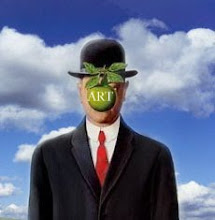
Areté
Make Art with arete.
Be an Artist with areté.
Just by saying areté you will have it.
Arete (Ancient Greek: ἀρετή), in its basic sense, means excellence of any kind. In its earliest appearance in Greek, this notion of excellence was ultimately bound up with the notion of the fulfillment of purpose or function: the act of living up to one's full potential.
Areté is explicitly linked with human knowledge, where the expressions "virtue is knowledge" and "Areté is knowledge" are used interchangeably. The highest human potential is knowledge and all other human abilities are derived from this central capacity. If Areté is knowledge and study, the highest human knowledge is knowledge about knowledge itself; in this light, the theoretical study of human knowledge, which Aristotle called "contemplation," is the highest human ability and happiness." -Richard Hooker *** thanks Wikipedia ****
And from Areté we get Art. Art in the purest essence of the word, in every expression.
Wednesday, July 11, 2012
Equity
"For every wrong there is a remedy"
In Latin, "Ubi jus ibi remedium" ("where there is a right, there must be a remedy"). It's a maxim of law >> Equity will not suffer a wrong to be without a remedy.
"The maxims of equity evolved in Latin, and eventually translated into English, as the principles applied by courts of equity in deciding cases before them."
"Equity is commonly said to "mitigate the rigor of common law", allowing courts to use their discretion and apply justice in accordance with natural law."
"Natural law, or the law of nature (Latin: lex naturalis), is a system of law that is purportedly determined by nature, and thus universal. Classically, natural law refers to the use of reason to analyze human nature -- both social and personal -- and deduce binding rules of moral behavior."
The Aristotelian approach to practical reasoning is based on the notion of a virtue, and generally avoids the separation of 'moral' considerations from other practical considerations.
Morality thus came out of the very idea (the essence) of civilization itself. Aristotle tutored Alexander the Great, who used these principles, morality, ethics, logic, to create law -- EQUITY -- and a civilization we call "Western Civilization". The civilization Alexander (and his wise men) created was the basis of the empires of Greece and Rome, which Europe and English are derived from, and which the American Republic was built on.
Laws are there to assure that those without morality are punished, wrongs are set right, so society/civilization can prosper.
Monday, June 4, 2012
Disruptive Innovation = Postmodernism